Table of contents
- What is a mezzanine floor and when could a permit be needed?
- Differences between planning permission and Building Regulations approval
- Which technical requirements apply when submitting an application?
- Fire safety and workplace-safety requirements for mezzanine floors
- Permit-free mezzanine floors: when is that possible?
- How to apply for a mezzanine floor permit in the UK
- Common mistakes when applying for a permit
- The role of Nolte Mezzanine in your permitting process
- Advantages of a mezzanine floor compared to relocating or major renovations
- Want to find out if your mezzanine floor needs a permit?
- Frequently asked questions about mezzanine floor permits
What is a mezzanine floor and when could a permit be needed?
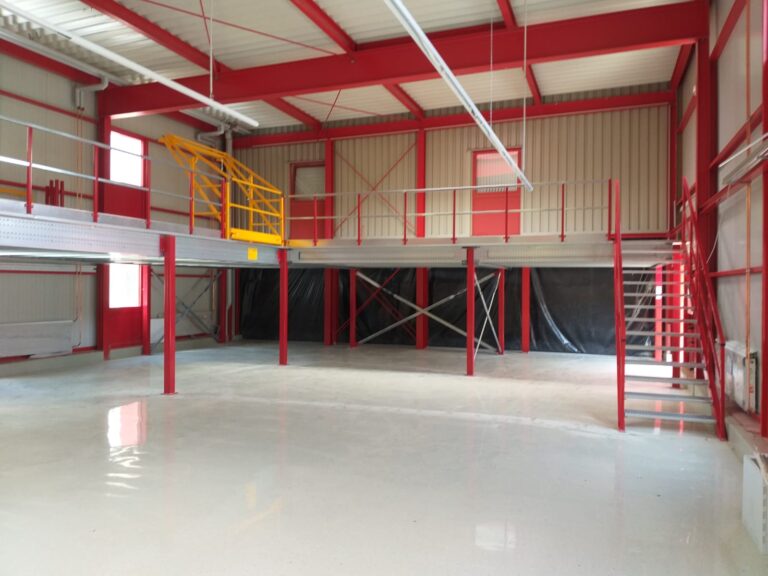
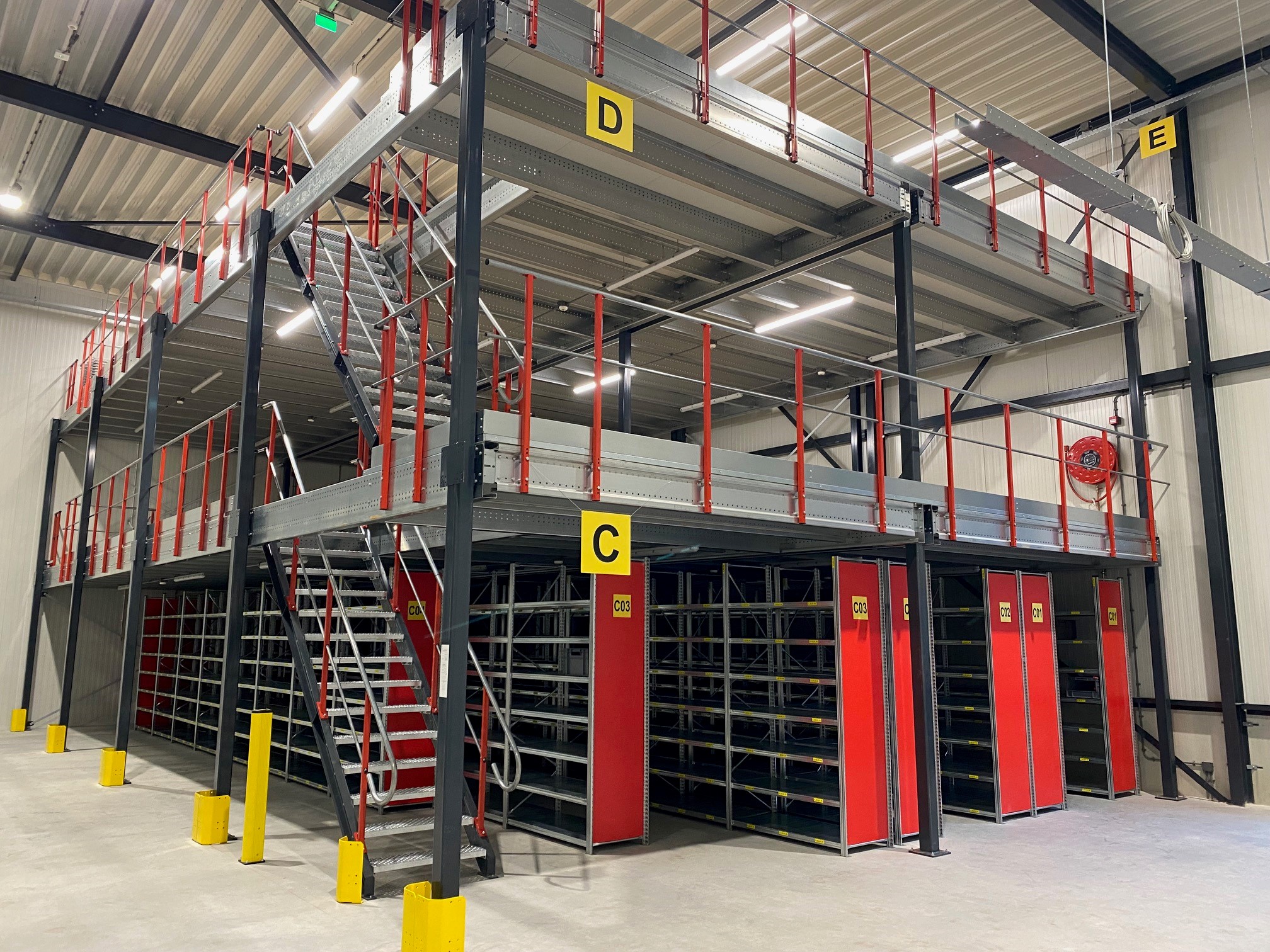
A mezzanine floor is an intermediate floor inserted into an existing building to create additional storage or workspace. In the UK the need for permission depends on factors such as structural connection, use and size. When the mezzanine is fixed to the building structure or used for work/occupancy, authorities will often require approval under Building Regulations or sometimes planning permission. For free-standing or semi-permanent mezzanine floors used only for light storage, permission may not be required. Always check with your local planning authority (LPA).
Differences between planning permission and Building Regulations approval
In the UK the term “planning permission” refers to consent under the planning regime (land use, external changes, change of use). Even if planning permission is not required, all mezzanine floors must comply with Building Regulations 2010 (or the latest version), which cover structural safety, fire safety, access and other technical standards.

Overview of permits for a mezzanine floor
| Type of approval | When needed (UK typical cases) | What to submit |
|---|---|---|
| Planning permission | If the mezzanine affects external appearance, roof height, changes the building’s use, or is for retail and adds more than 200 m² | Site plan, use change details, possibly structural plans |
| Building Regulations approval | Always when installing a mezzanine floor for occupancy or storage, whether or not planning permission is required | Structural calculations, fire-safety info, access/staircase plans, load capacity, materials |
Technical requirements when submitting an application
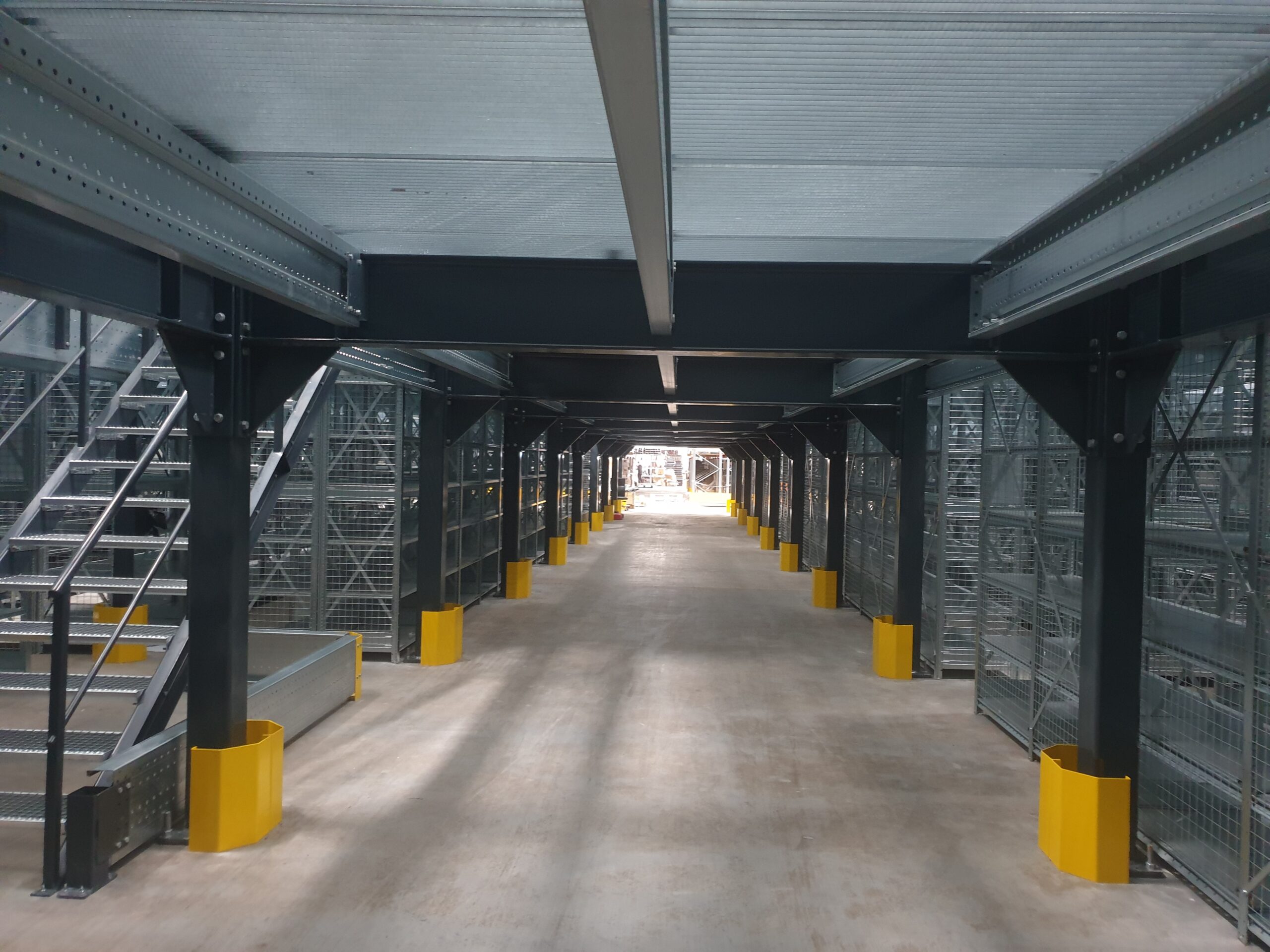
Typical requirements under UK Building Regulations include structural calculations for load capacity, safe staircases or ladders, secure railings, fire resistance, adequate escape routes, and compliance with accessibility standards (e.g. Part M for disabled access) if the mezzanine is used by employees or the public. The load-bearing capacity and total weight must be calculated and documented. For example, offices or heavy storage require higher load ratings and possibly fire-resistant floors or special fire escape planning.
Fire safety and workplace-safety requirements for mezzanine floors
Under UK regulations fire safety is critical. Mezzanine floors used for workplace or public use must provide safe escape routes, fire-resistant materials, possibly sprinkler systems depending on use and size. If used as a workplace, health and safety rules apply — for example safe railings, lighting, proper alarms, and secure load-bearing structures.
Daarom kiest men voor Nolte Mezzanine
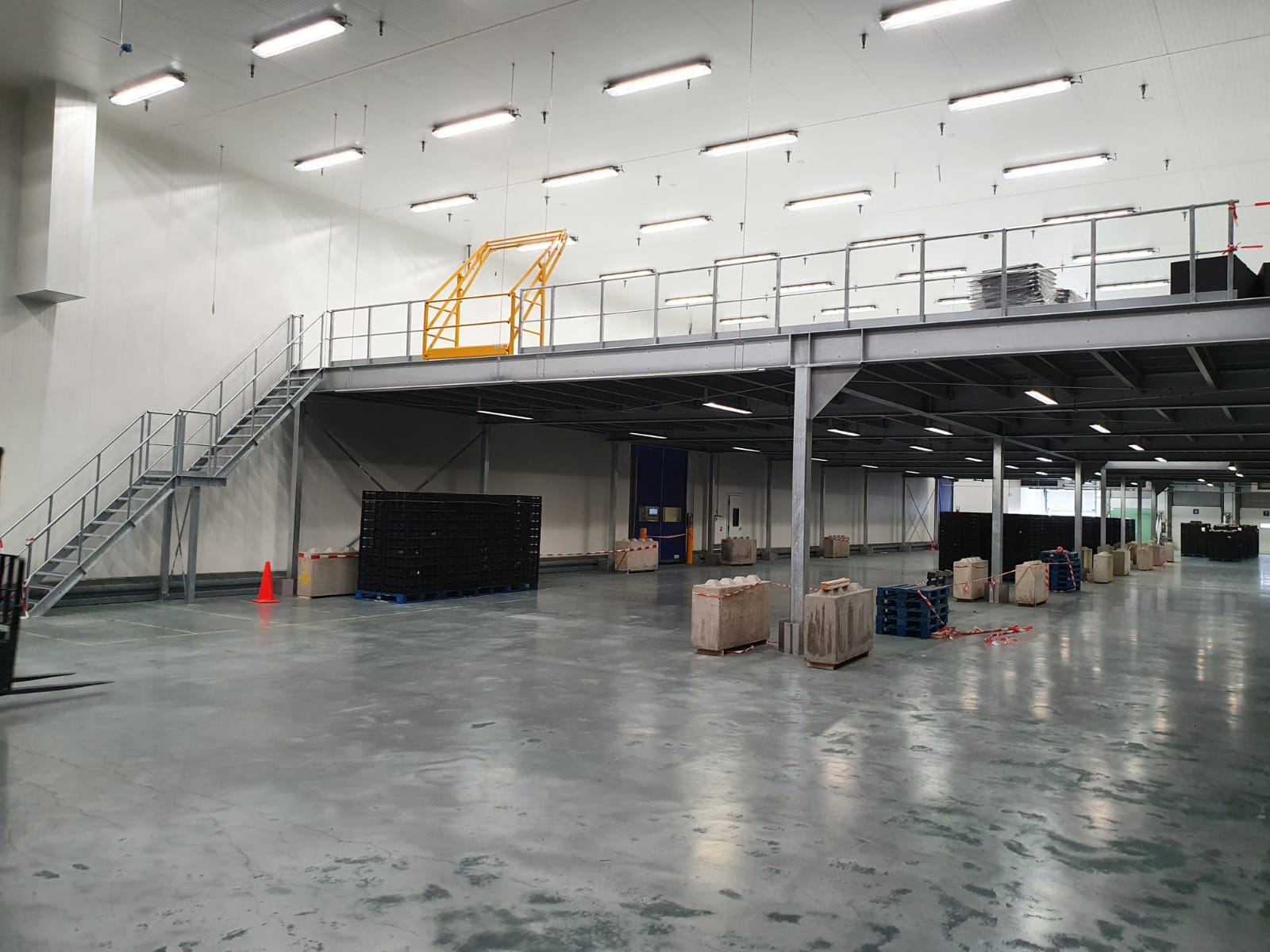
Als specialist in het ontwerpen, produceren en monteren van verschillende magazijnoplossingen is het ons doel om iedereen van de juiste vloer te voorzien. Door de jaren heen kiezen klanten voor onze expertise, diverse mogelijkheden en flexibele aanpak. Uw project is voor ons uniek, wat inhoudt dat we een oplossing bedenken die specifiek aansluit op uw wens.

Permit-free mezzanine floors: when could that apply?
Not every mezzanine requires planning permission in the UK. If the mezzanine is entirely internal, free-standing or semi-permanent, does not change the external structure or building use, and is used for light storage rather than increased occupancy, it may fall under “permitted development”. Yet even then Building Regulations may still apply. You cannot assume full permit-free status without verifying with the local authority.
How to apply for a mezzanine floor permit in the UK
Typically you submit a Building Regulations application to the local Building Control Body (either the local authority or an approved inspector). Provide structural calculations, load-capacity data, fire-safety measures, staircase and escape plans. If planning permission is required (for example for external changes, change of use, or large retail mezzanines), submit a planning application to your Local Planning Authority. Working with an experienced mezzanine supplier helps ensure that all technical documentation is correct and comprehensive.
Common mistakes when applying for a permit
Many delays happen because applications are incomplete: missing structural calculations, missing fire-safety plans, unclear load specifications, or lack of staircase and escape route designs. Some applicants also forget to check whether a mezzanine increases the total floor area above certain thresholds (e.g. more than 200 m² in retail use) or changes the building’s use class.
The role of Nolte Mezzanine in your permitting process
Nolte Mezzanine supports clients with structural calculations, detailed technical drawings, and compliance with UK Building Regulations. We help assemble all necessary documentation so you can submit Building Regulations applications (and planning applications if required). We don’t make assumptions about local planning allowances; we assist with the preparation so that you can check with your local authority whether planning permission is needed.

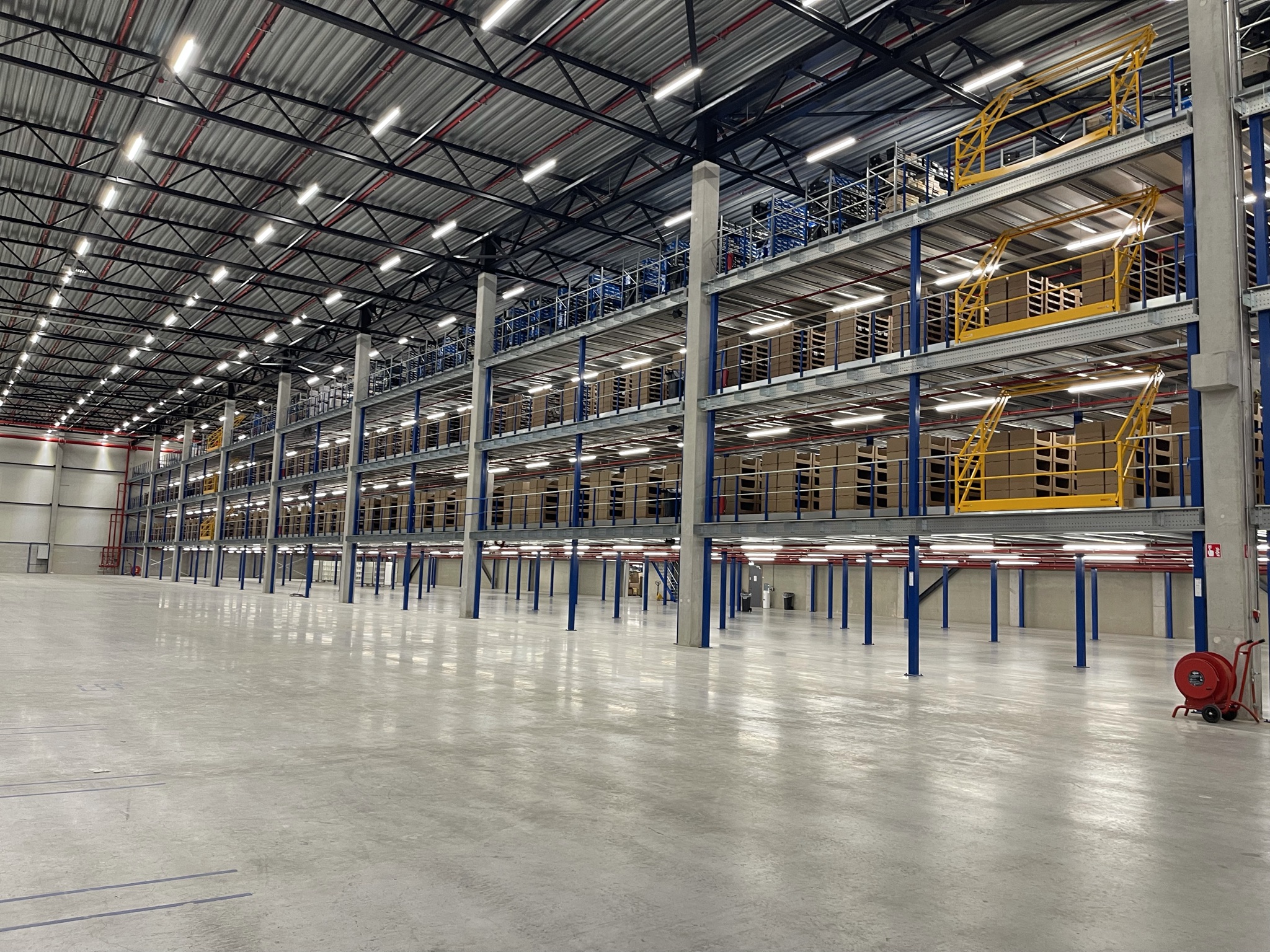
Advantages of a mezzanine floor compared to relocating or major renovations
A mezzanine floor can offer a cost-efficient way to increase usable space without major building extensions or relocation. It can be quicker, more flexible, and (with proper planning) fully compliant with safety and building laws.
Disclaimer
Note: the information on this page is intended as a general guideline. Building regulations may vary by municipality, country, and sector. Always contact your local authority for the most up-to-date information.
Want to find out if your mezzanine floor needs a permit?
Contact Nolte Mezzanine for a free consultation. We will review your building layout and intended use, provide you with structural calculations and drawings tailored to UK standards, and help you determine whether planning permission and/or Building Regulations approval is needed.
Frequently asked questions about mezzanine floor permits
What happens if I install a mezzanine floor without required permission?
If the mezzanine needs planning permission but none was obtained, or if Building Regulations approval was required but disregarded, local authorities may take enforcement action. This can include requiring removal of the mezzanine or fines. In the worst case a “stop notice” or demolition order may be issued.
Will a mezzanine floor affect my building insurance or fire insurance?
Yes. Adding a mezzanine can affect fire-safety classification, load-bearing standards and access regulations. Proper documentation and approval shows that the installation meets UK Building Regulations, which helps demonstrate compliance to insurers and reduces liability.
Can Nolte Mezzanine also deliver permit-free solutions?
That depends on the specific project. For light, free-standing mezzanine floors used solely for storage, a solution may be possible without planning permission. But even then we strongly advise clients to check with their local planning authority before proceeding.
Does Nolte help with communication with the local authority?
Yes. Nolte Mezzanine can prepare the full set of documents (structural plans, fire-safety and load-data, usage descriptions) so that you can submit an application to the right authority (Building Control or Planning).